NIST CSF 2.0's Govern function in practice: What 'governance' actually asks of leaders
Two years after the Govern function was introduced, organizations were still learning what it actually required. It turns out governance is less about policies and more about who is accountable. Here is what the function asks in practice.
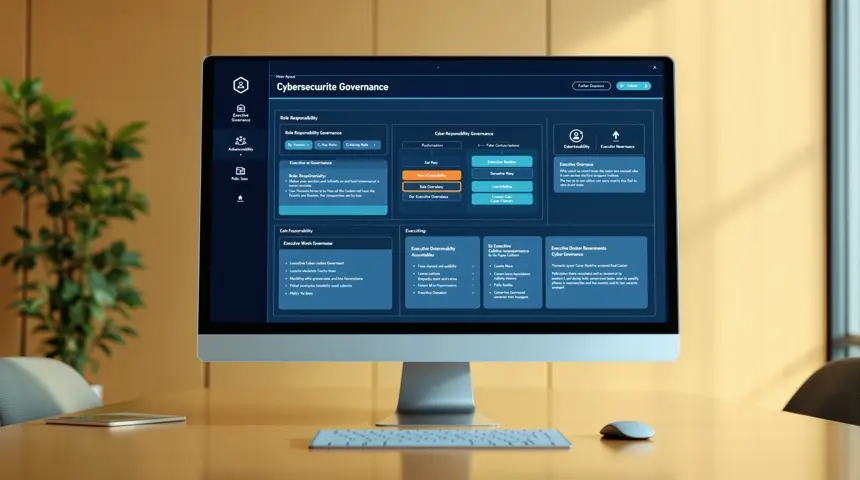
When NIST added the Govern function to its Cybersecurity Framework in early 2024, many organizations greeted it with a nod and a policy update. Two years later, in 2025, the harder lesson had landed: governance is not primarily about documents, it is about accountability, and it asks more of leaders than most realized. The Govern function, positioned at the center of the framework, turned out to be the function that made all the others possible, and the organizations that understood this earliest were the ones that built programs that actually worked. Here is what the Govern function asks in practice, and what it means for leaders and for training.
Governance is accountability, not paperwork
The most common misunderstanding of the Govern function was to treat it as a documentation exercise, a set of policies to write and file away. NIST's intent was the opposite. The function exists to establish who is responsible, who is accountable, and how decisions about risk are actually made. It asks organizations to define roles and responsibilities clearly, to ensure leadership understands and oversees cyber risk, and to align security strategy with the organization's broader mission. In practice, that means a named owner for the program, a board or executive that is genuinely engaged, and a decision-making process that is real rather than ceremonial. Policies matter, but only as the written expression of accountability that already exists.
The board and executive role
A recurring theme of the Govern function is that cybersecurity is a leadership responsibility, not a delegation to the IT department. The function expects management to establish the risk strategy, set the tone, and hold the program accountable. In 2025, this meant boards and executives were being asked questions they could not answer by deferring to staff: what are our most significant cyber risks, how are we managing them, and how do we know the program is working. The organizations that handled this well treated cyber risk as a standing board-level topic, with regular briefings and clear metrics, rather than an annual slide in a compliance deck. Governance, in this sense, is the visible involvement of leadership.
Where training fits governance
Security awareness training sits squarely within the Govern function's scope, and not just as a control to check off. The function's emphasis on roles, responsibilities, and communication means that a trained workforce is evidence that governance is functioning. When every employee understands their security responsibilities, when new hires are onboarded into that understanding, and when leadership can point to documented training as proof, the organization is demonstrating that its governance is real. Conversely, an organization with no training, or training that cannot be evidenced, reveals a gap in governance itself. In 2025, auditors and insurers increasingly read training documentation as a proxy for the quality of the governance function.
The connection to risk management
The Govern function also ties security to the organization's broader risk management. The framework expects cyber risk to be integrated into enterprise risk, not treated as a separate silo, and for the risk appetite and tolerance to be defined at the leadership level. This matters because it determines how resources are allocated and how tradeoffs are made. An organization that has not defined its cyber risk tolerance cannot make principled decisions about what to protect, what to accept, and where to invest. The Govern function asks leaders to make these calls explicitly, and to communicate them, so that the rest of the framework, the protect, detect, respond, and recover activities, has a clear mandate to operate within.
Why governance was the missing piece
Looking back from 2025, the addition of the Govern function made intuitive sense, because it addressed the most common reason cybersecurity programs stall: a lack of leadership engagement and clear accountability. The original framework's five functions assumed an organizational context that was often absent in practice. Programs failed not because the technical controls were unknown, but because no one with authority owned them, resources never materialized, and the work was treated as a compliance chore rather than a strategic priority. The Govern function put that context front and center, and in doing so it named the thing that had been missing all along.
The practical takeaway
For organizations still wrestling with the Govern function in 2025, the practical path was clear and surprisingly simple. Name an owner for the cybersecurity program with real authority. Make cyber risk a standing leadership topic with regular, meaningful briefings. Define roles and responsibilities, and train every employee into them. Document all of it, because documentation is what turns governance from a claim into evidence. None of this is technically difficult, but it requires leadership to be genuinely involved. The organizations that embraced that reality found that the Govern function, rather than adding bureaucracy, gave their entire security program a foundation it had been missing.

Related reading
All articles

Written by
The Simple Training Center Team
We build and run Simple Training Center. These articles come from our work making compliance and security training practical for small and mid-size teams. No guest posts, no fluff.
More from the teamPut it into practice
Reading is step one. Training is what keeps you compliant.
Turn these insights into action. Our role-based security training takes minutes to set up and gives every learner a verifiable certificate of completion.